
From Lab Bench to Editor’s Desk: Your Step-by-Step Guide to Academic Publishing
Author: Dr. Priyanka Bhoj • Publication: Versatile Scientist • Updated: Aug 2025 Thinking of moving from the lab bench to the editor’s desk? Great choice! Acade...
Author: Dr. Priyanka Bhoj • Publication: Versatile Scientist • Updated: Aug 2025
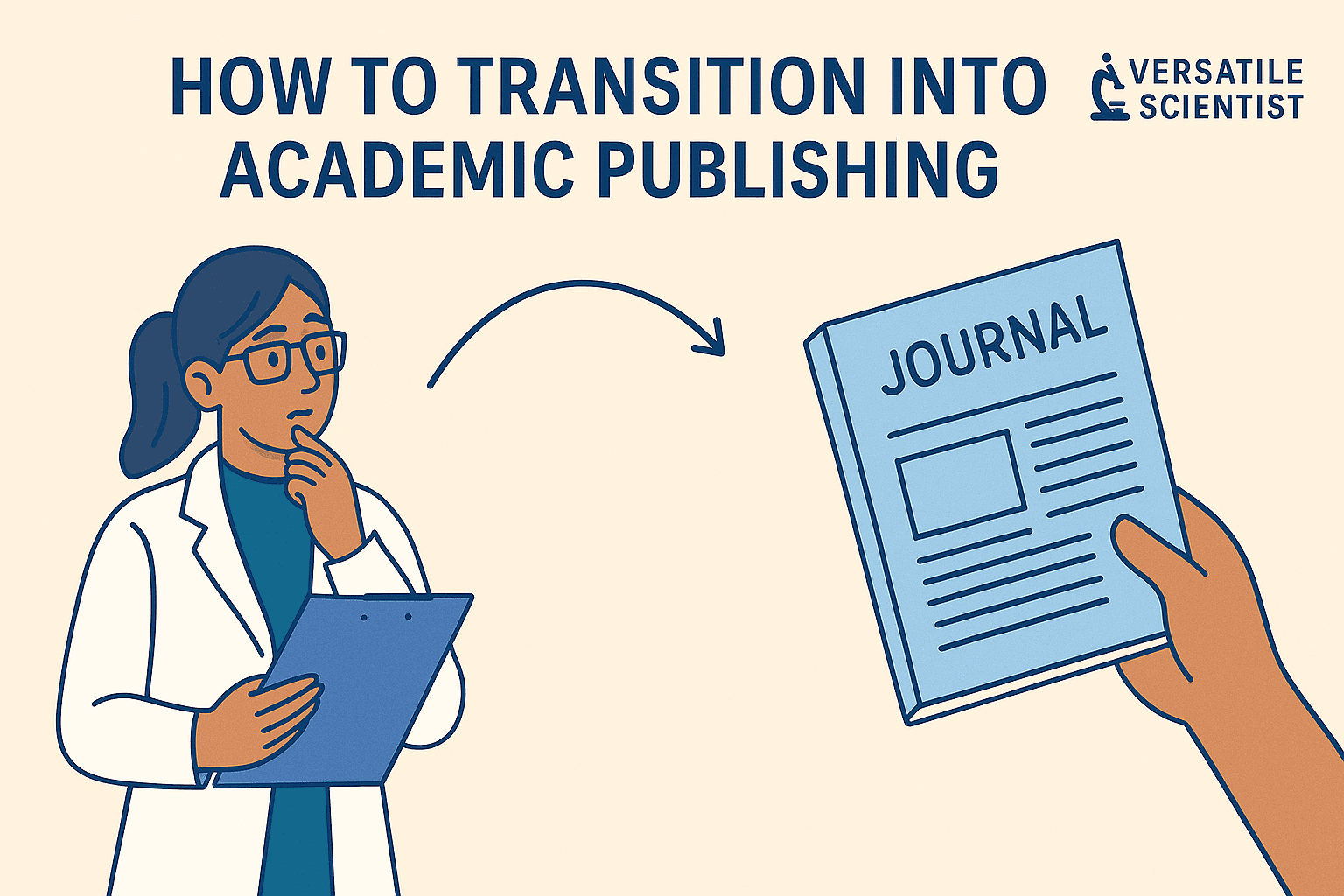
Thinking of moving from the lab bench to the editor’s desk? Great choice! Academic publishing is a career that keeps you connected to science, sharpens your communication skills, and lets you shape what gets read and cited. This guide gives you a practical, step-by-step path to make that transition—without fluff.
Why Consider Academic Publishing?
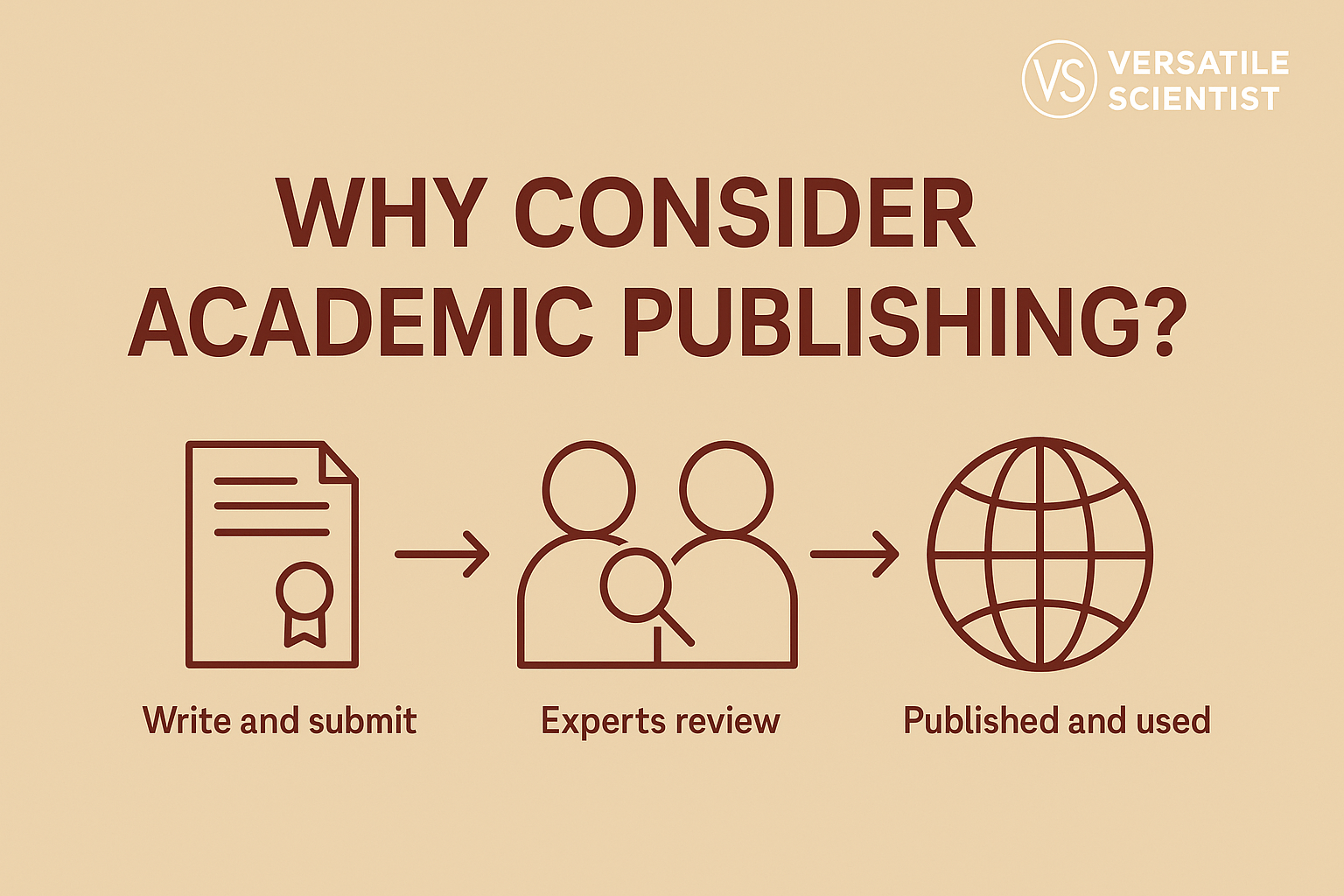
Think of academic publishing as the bridge between discoveries and the world that needs to hear about them. When researchers complete a study, they don’t just tuck it away in a drawer—they write it up and submit it to a publisher. From there, experts (peer reviewers) put the work under a microscope—figuratively this time—to check its accuracy, quality, and reliability. If it passes the test, it’s published so others can read it, use it, and build on it.
But here’s the part many people don’t realize:
Behind every published paper is a team of people who make it happen—and they’re not all sitting in labs. If you love reading widely, making thoughtful decisions, and helping others share their work with impact, publishing offers a rewarding alternative to life at the bench.
And here’s the key: it’s not just publishing. It’s about shaping how science is communicated, maintaining quality and integrity, and ensuring that good research finds its audience.
Step 1: Identify Your Transferable Skills
You may already have valuable skills that fit directly into publishing roles. Reflect on your experience with:- Peer reviewing research papers
- Editing colleagues’ manuscripts
- Managing collaborative projects
- Presenting at conferences or seminars
Step 2: Know Where to Apply
Academic publishing in India is a growing industry. Major publishers with offices, operations, or editorial teams in India include:- Springer Nature Technology and Publishing Solutions (Pune and Chennai)
- Elsevier (Chennai, Gurgaon)
- Taylor & Francis (New Delhi)
- Wiley (Bengaluru)
- SAGE Publications (New Delhi)
- Cambridge University Press India (New Delhi)
- MedKnow (Mumbai)
- Cactus Communications (Mumbai, Remote)
- KnowledgeWorks Global Ltd. (Remote)
Roles in Academic Publishing
For Scientists/Subject Matter Experts:
These roles require a background in science (life sciences, physical sciences, medical sciences, social sciences, engineering, humanities, etc.):- Scientific/Associate Editor: Decides on scientific content, manages peer review, and works with reviewers and authors.
- Editorial Submission Advisor/Transfer Desk Specialist: Matches manuscripts to the right journals and advises authors on submissions.
- Manuscript Coordinator (Subject Expert): Screens papers for fit and quality before sending to reviewers.
- Journal Development Editor (Subject Expert): Works on content strategy for journals in your field.
For Non-Scientists (Generalist or Operations Roles):
These roles rely more on communication, organization, and production skills rather than subject expertise:- Editorial Assistant: Manages timelines, communications, and submission systems.
- Production Editor: Oversees formatting, proofreading, and final publication.
- Operations Executive: Handles workflow tracking, metadata, and quality control.
- Marketing & Outreach Executive: Promotes published work and journals.
Step 3: Build Credibility Quickly
- Volunteer as a peer reviewer or guest editor for smaller journals.
- Publish short pieces about science communication or journal processes.
- Complete short online courses (publishing ethics, such as COPE and ICMJE, and editorial workflows).
- Network: attend editorial webinars, follow journals, and connect with editors on LinkedIn.
Step 4: Tell the Right Story in Your Application
Frame your CV and cover letter to highlight:- Concrete editorial or reviewing experience (even internal lab edits count).
- Examples of clear scientific writing or communications you produced.
- Instances where you managed timelines, people, or complex tasks.
- A brief line explaining why you want to move into publishing—focus on impact, not escape from research.
Step 5: Prepare for Interviews
Common interview topics include handling difficult authors and complex peer-review workflows, judging a paper’s fit, and prioritizing workloads. Use STAR-format answers (Situation, Task, Action, Result). Also, be ready to critique a short manuscript sample—gently and constructively.Bonus: Quick Daily Routine to Develop Editorial Muscle
- Read 1 paper/day: Practice summarizing it in 2–3 sentences + one line on fit for a hypothetical journal.
- Review author guidelines: Pick 2 journals and compare scope and formatting.
- Practice feedback: Edit a paragraph for clarity and explain your changes in comments.

Case Example—What Helped Me
I leveraged my PhD research background, extensive peer-review experience, and experience with Springer Nature's transfer desk to transition into editorial roles. Recognition for productivity, time management, and quality (awards, badges) opened doors—but the core was consistently building small, relevant experiences.
My reward? Helping a promising study find the right journal home, watching it get published, and knowing you’ve accelerated its journey to the researchers (and patients) who need it. That’s the satisfaction academic publishing delivers every day!
Ready to Start?
Switching to academic publishing is less about starting over and more about redirecting your scientific curiosity. With small, deliberate steps—such as reviews, networking, and practice—you can make a convincing and rewarding transition. In short, if you’re ready to explore this world, start small: review a paper, connect with editors, or volunteer for an academic society’s journal—every action moves you closer to your next big opportunity. Curious to take the plunge? Here are some exciting openings at Springer Nature, India, waiting for passionate candidates like you.Related Articles
 Career path
Girls' Education Roadmap: India and Abroad
A stage-by-stage education roadmap for girls in India, especially rural girls: schools, scholarships, study abroad and support. Download the full PDF.
 Career path
Google Student Researcher Program 2026: Ultimate 12-Step Guide to Eligibility, Application & Benefits
Google Student Researcher Program 2026 is a highly prestigious global research opportunity offered by Google for students pursuing Bachelor’s, Master’s, or PhD ...
 Career path
CUET-UG-2026-guide
CUET UG 2026 is one of the most important national-level entrance examinations in India for students seeking admission into undergraduate programs offered by Ce...